Site icon Navigating Knowledge Across Domains

Outright Purchase Agreement: Complete Guide for 2025 Deals

Outright Purchase Agreement

Outright Purchase Agreement

Outright Purchase Agreement — Structure, Applications & Strategy

Premium, always-visible explainer • Namespaced • Last updated: 2025-10-26

Outright purchase: unambiguous ownership

Featured Overview

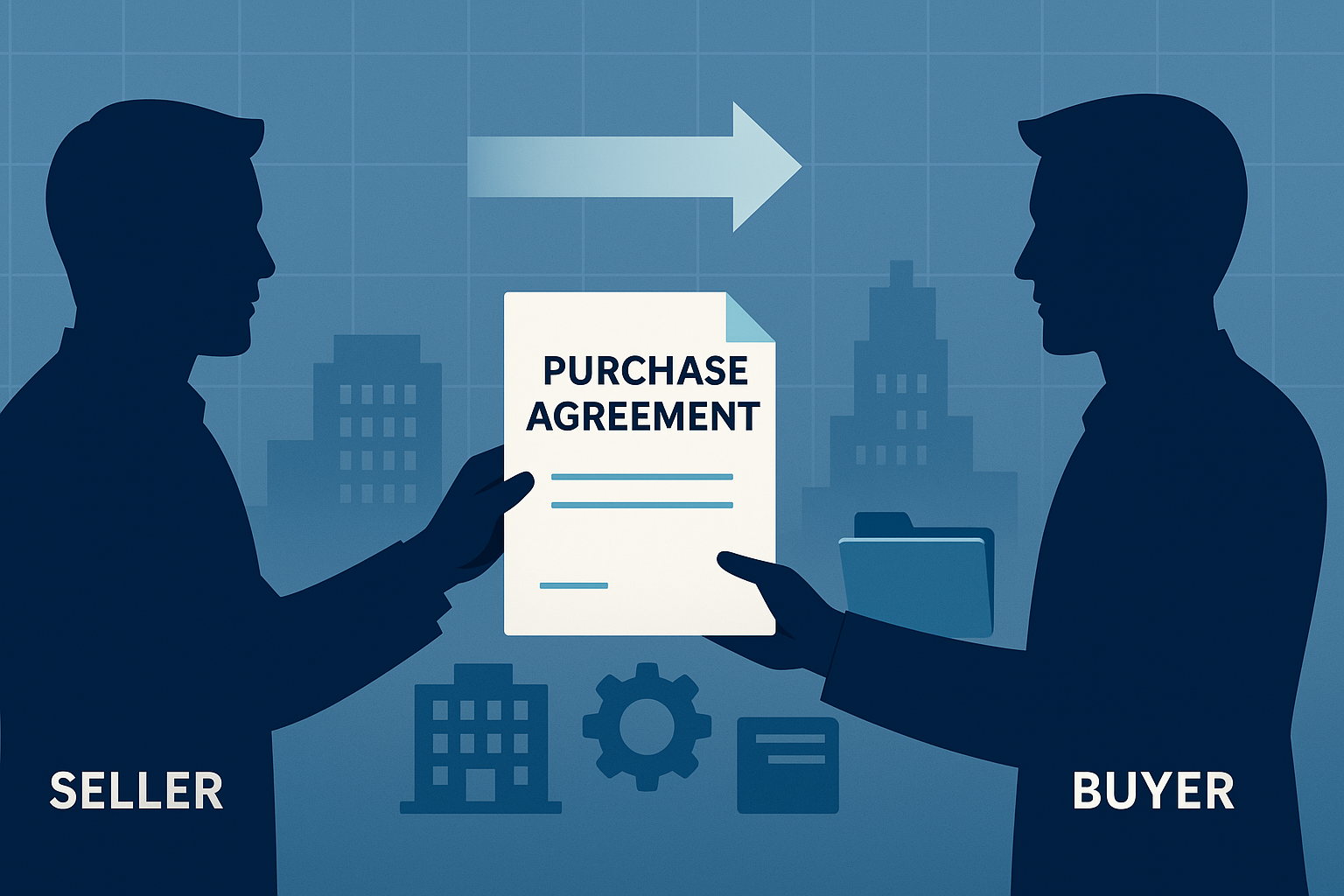
SELLER Holds title & risk until transfer BUYER Receives title & reward on completion Title & Risk transfer Asset

Introduction

Defining the Outright Purchase: The Principle of Unambiguous Ownership Transfer
An outright purchase represents the most direct and definitive form of asset acquisition. It is a transaction wherein one party fully and immediately acquires legal ownership of specified goods, assets, or property from another party. Characterized as a “no frills purchase of an asset,” its fundamental principle is the complete and final transfer of all rights, risks, and rewards of ownership to the buyer, typically upon the execution of a single, full payment. This structure stands in stark contrast to alternative arrangements such as rentals, contract hire, or conditional sales, where the transfer of legal ownership is intentionally delayed, contingent upon future events, or may not occur at all. The core function of an outright purchase agreement is to facilitate a clear, final, and unambiguous transfer of title, thereby serving as a prophylactic measure against potential future disputes over ownership or responsibility.

Fundamental Purpose: Certainty, Finality, and the Immediate Allocation of Risk and Reward
The primary objective of an outright purchase agreement is to codify the mutually agreed-upon terms and conditions of a sale, transforming them into a legally binding and immutable contract upon execution. This document serves as a definitive roadmap for the transaction, meticulously detailing the obligations, rights, and expectations of both the buyer and the seller. Its purpose extends beyond mere documentation; it is an instrument of protection, ensuring clarity on every facet of the transaction—from the purchase price and payment mechanics to the precise condition of the asset and the timing of the ownership transfer. By establishing a fixed and legally enforceable framework, the agreement provides certainty and finality, allowing for the immediate and clear allocation of all associated risks and rewards.

Core Traits at a Glance

  • Immediate title transfer on completion (usually against full payment or delivery milestone).
  • Single-step payment (or short schedule) → minimal residual obligations post-completion.
  • Risk & reward pass to the buyer at the contractually defined point (tie to delivery terms/Incoterms).
  • Warranties & defects limited to agreed scope and duration (no ongoing hire obligations).
  • Clean balance sheet treatment (asset recognised; contrasts with leases/HP under accounting standards).
Best for: one-off assets Low admin overhead Clear risk allocation

Report Structure & Analytical Framework

Overview of the Report’s Structure and Analytical Framework
This report provides an exhaustive analysis of the outright purchase agreement, deconstructing its legal and financial architecture for sophisticated business stakeholders. The analysis begins with a dissection of the agreement’s core legal anatomy, examining its foundational components and the sophisticated clauses that govern risk. Subsequently, the report will conduct a comparative analysis, positioning the outright purchase against alternative transactional structures to highlight its unique strategic advantages and disadvantages. This is followed by a deep exploration of the multifaceted implications—legal, financial, and tax-related—for both purchasers and vendors. Finally, the report will map the entire transaction lifecycle, from the initial due diligence and negotiation phases through to closing and the often-complex world of post-closing adjustments, with a consistent focus on strategic risk management.

1) Legal Anatomy

Foundations, title & risk clauses, warranties, remedies, representations.

2) Comparative Lens

Outright vs HP/lease/conditional sale—use-cases, trade-offs, costs.

3) Implications

Legal, financial, tax impacts for buyers and sellers; governance fit.

4) Lifecycle Map

Due diligence → negotiation → closing → post-closing adjustments.

When to Use an Outright Purchase

  • Assets with stable value and low obsolescence risk (e.g., land, standard equipment).
  • Where the buyer seeks full control (modifications, resale, collateralisation).
  • Procurements needing finality (no usage restrictions, no return conditions).
  • Situations where finance cost of HP/lease outweighs benefits.

Strategic Drafting Essentials

  • Transfer trigger: define if title passes on payment, on delivery, or on acceptance (align with Incoterms).
  • Risk point: expressly state when risk passes to avoid “gap” between risk and title.
  • Warranties: scope, duration, remedy (repair/replace/refund) and exclusions.
  • Payment mechanics: full payment, escrow, bank transfer, or LC; set default interest & remedies for non-payment.
  • Condition & inspection: acceptance criteria, defect documentation, fitness for purpose (if applicable).
  • Title assurances: no liens/encumbrances; vendor has right to sell.

Outright vs Alternatives (Quick Comparison)

ModelTitleRiskPaymentsGood for
Outright Immediate At transfer point Lump sum / short Control Finality
Hire Purchase At last instalment Buyer bears use-risk Instalments + interest Cash-flow
Lease Never / end-option Often with lessee Periodic rent Short-term use
Conditional Sale Upon condition Varies (often buyer) Milestone/instalments Performance-based

Buyer & Seller Checklists

Buyer focus

  • Vendor’s good title & no encumbrances (seek representations).
  • Transfer trigger aligned with delivery & insurance.
  • Clear warranty + defect remedies; document acceptance tests.
  • Payment security (escrow/LC) if risk passes pre-delivery.

Seller focus

  • Full payment due before title passes (or reserve title if needed).
  • Risk point explicit; insurance coverage up to handover.
  • Limit liability & exclude indirect loss where lawful.
  • Default remedies (suspension/interest) clearly drafted.
What could go wrong? • 3 common pitfalls to watch
Risk/title out of sync with delivery. If title passes on payment but risk on delivery, a transit loss creates a coverage gap. Align with the chosen Incoterm and confirm insurance continuity.
No security while awaiting funds. If title passes before money clears, seller risks non-payment. Use escrow/LC or a limited retention-of-title (where lawful) until receipt is final.
Asset issues post-handover. Vague warranty scope or undisclosed encumbrances/liens trigger disputes. Specify remedies, run a lien search, and attach a signed condition report at delivery.
Tip: Add a small “Last updated” stamp near your article title for SEO freshness.
No toggles WP-safe Mobile responsive

Part I — Anatomy of the Outright Purchase Agreement

Always-visible explainer • Namespaced • Last updated: 2025-10-27

Forward-looking risk management

Part I: Anatomy of the Outright Purchase Agreement

A purchase agreement is not merely a record of a transaction; it is a forward-looking risk management instrument. The negotiation of its clauses, particularly representations and warranties, contingencies, and indemnification, represents a complex allocation of unknown future liabilities between the buyer and seller. These clauses are not boilerplate; they are the core mechanisms for managing uncertainty. A buyer cannot possess perfect information about an asset or business. Representations and warranties compel the seller to stand behind certain statements of fact. Contingencies provide the buyer with a legal exit ramp if new, adverse information comes to light before closing. Indemnification creates a private, contractually defined remedy for post-closing discoveries of pre-closing problems. Therefore, the agreement’s primary function, beyond facilitating the transfer of title, is to create a predictable and enforceable framework for managing the inevitable discovery of imperfect information.

Core Components and Foundational Clauses

The legal architecture of an outright purchase agreement is built upon several foundational clauses that together define the scope, terms, and execution of the transaction. The precision of these clauses is paramount to achieving the finality that is the hallmark of an outright purchase.

Identification of Parties Asset Description Price & Payment Closing & Title Transfer Risk Allocation R&W • Contingencies • Indemnification

Identification of Parties

At its most basic level, the agreement must clearly and accurately identify the parties to the transaction. This section must detail the full legal names and contact information (including addresses) for both the buyer and the seller, as well as any relevant affiliates. Using the correct legal names of the individuals or entities involved is crucial for the contract to be legally enforceable against the proper parties. Any ambiguity or error in this section can lead to significant legal disputes or render the agreement unenforceable, thereby undermining the entire transaction.

Description of the Asset

The level of detail and specificity required in the “Description of Asset” clause is directly proportional to the complexity of the asset and the potential for future disputes. This reveals a fundamental principle of contract drafting: ambiguity is the enemy of finality. The agreement must unequivocally identify the asset being sold, and the standard for this description varies significantly depending on the nature of the asset.

  • Real Estate: Include the official legal description, plus precise lists of inclusions (fixtures) and exclusions (seller’s removable property).
  • Business Assets: Itemize all included tangible/intangible assets and excluded assets & liabilities to avoid inheriting unwanted obligations.
  • High-Value Personal Property: Specify make/model/year/serials/condition as applicable; this becomes the canonical record if disputes arise.

Drafting effort here is a direct hedge against litigation cost and uncertainty.

Purchase Price and Payment Terms

This section forms the financial heart of the agreement, outlining the total consideration to be exchanged for the asset. Clarity is paramount, as it involves a substantial financial commitment. The clause must specify the total purchase price and the form of payment, which in a true outright purchase is typically a single lump sum paid via cash, wire transfer, or certified funds at closing. It explicitly excludes financing or installment payment plans provided by the seller.

This section also details the handling of the earnest money deposit—a good-faith payment made by the buyer upon signing the agreement to demonstrate the seriousness of their offer. The clause will specify the amount of the deposit, who will hold it (typically an escrow agent), and the conditions under which it will be applied to the purchase price at closing or refunded to the buyer (e.g., if a contingency is not met). Finally, it should address the allocation of transaction-related costs, such as closing fees, transfer taxes, and recording fees, specifying which party is responsible for each expense.

Closing Procedures and Transfer of Title

This clause details the “finish line” of the transaction, outlining the precise mechanics for the consummation of the sale. It establishes the closing date and location, which is the moment when all final documents are signed and ownership is officially transferred. The section describes the required deliverables for each party at closing, such as the seller’s execution of a deed (for real estate) or a bill of sale (for personal property and business assets) and the buyer’s delivery of the purchase funds. Critically, this clause defines the exact point at which legal title and the risk of loss pass from the seller to the buyer, which is typically upon the successful completion of the closing. It also specifies the date and time of possession, when the buyer is granted physical control of the asset.

Risk Allocation and Protection Mechanisms

Beyond defining the terms of the exchange, a sophisticated purchase agreement functions as a comprehensive risk allocation instrument. It employs several key mechanisms to manage uncertainty, protect the parties from unforeseen issues, and provide remedies in the event of a breach.

Representations and Warranties (R&Ws)

Representations and warranties are contractually binding statements of past or present fact made by the seller concerning the business or asset being sold. A representation is an assertion of fact, while a warranty is a promise that a fact is true. In practice, they are presented together and serve to provide the buyer with a detailed picture of what they are acquiring, forming the factual basis upon which the deal is predicated.

Common seller representations include assurances regarding the accuracy of financial statements, the seller’s undisputed ownership of the assets, the absence of liens or encumbrances, compliance with all applicable laws and regulations, and the status of any pending litigation. These statements allocate risk to the seller by compelling them to stand behind the information provided during due diligence. If a representation or warranty proves to be untrue, it constitutes a breach of the agreement and gives the buyer a legal remedy, typically in the form of an indemnification claim for any resulting losses.

Tip: Add “Last updated” near the page title for freshness and snippets.
WP-safe Mobile responsive No toggles (always-visible)

Contingencies, Disclosures & Indemnification

Always-visible explainer • Namespaced • Last updated: 2025-11-24

Conditions precedent • Transparency • Remedies

Contingencies and Conditions Precedent

Contingency clauses, also known as conditions precedent, function as crucial safety nets, primarily for the buyer. These provisions stipulate that the obligation to complete the purchase is contingent upon the satisfaction of certain conditions. If a specified condition is not met or waived by the designated deadline, the party benefiting from the contingency has the right to terminate the agreement without penalty and, in the buyer’s case, receive a refund of their earnest money deposit.

Financing Inspection Title/Appraisal
  • Financing Contingency: exit if loan on agreed terms can’t be secured in time.
  • Inspection Contingency: professional checks; renegotiate or terminate if significant defects appear.
  • Appraisal Contingency: protect against value < price (often lender-required).
  • Title Contingency: terminate if liens/encumbrances/ownership issues cannot be cured; require marketable title.

These conditions must be fully satisfied or formally waived in writing for the agreement to become fully binding and for the obligation to close to become absolute.

Disclosures

The disclosure portion of a purchase agreement is a legal and ethical obligation for the seller to reveal all known material facts and defects related to the asset being sold. This duty of transparency is critical for building trust and protecting the buyer from catastrophic surprises after the transaction is complete.

  • Environmental hazards: lead/asbestos/industrial waste.
  • Structural issues: water damage, foundation movement.
  • Legal encumbrances: HOAs, easements, dues, covenants.
  • Other material facts that affect value or use—disclose to avoid misrepresentation or fraud claims.

Indemnification Clauses

The indemnification clause is the primary enforcement mechanism for the representations and warranties made in the agreement. It sets out how one party compensates the other for losses from a breach, defines loss, and establishes claim procedures. Heavily negotiated terms include survival, baskets, and caps.

Survival Periods

Set time windows for claims (e.g., 12–24 months for business warranties; longer/indefinite for fundamental items like title/authority).

Baskets (Deductibles)

Threshold before liability triggers. Tipping: once met, recover from first dollar; True deductible: recover only above threshold.

Caps

Maximum seller liability—often a percentage of price; separate/uncapped for fraud or fundamental warranties (as negotiated).

Tip: Add “Last updated” near the page title for freshness and snippets.
WP-safe Mobile responsive Always-visible

Outright Purchase vs Alternatives Part II • Deal Structures

How does an outright purchase really compare with conditional sales, installments, land contracts, asset deals, stock deals, and mergers?

Q
Quick answer: An outright purchase pushes all payment, tax, and liability consequences to a single closing date— title and risk move at once. Conditional sales, installment/land contracts, and many M&A structures split control, title, payments, and tax timing, so the parties share the risk of the unknown past and the tax impact over time.
1 · Why structure choice is the real battleground

The decision to use an outright purchase agreement is never just a drafting habit. It is a strategic choice that decides how risk, liability, and tax exposure are shared between buyer and seller.

In practice, different structures reflect opposing commercial instincts:

  • A buyer leans towards an asset purchase (or simple outright purchase) to avoid hidden or legacy liabilities, and to get immediate control.
  • A seller prefers a stock sale or installment-type structure for a cleaner legal exit and smoother tax bill, even if that pushes more risk and complexity onto the buyer.

In other words, the “deal structure” is the primary battlefield: who carries the risk of the unknown past, and who gets the tax and cash-flow upside of the future.

Outright purchase vs seller-financed models

Seller-financed structures are not just simple “the seller lets the buyer pay later”. Legally, they often blend elements of a sale, a loan and sometimes a lease. That hybrid nature creates extra risk for the buyer compared with a clean outright purchase where title, possession and risk normally transfer together at closing.

Conditional sale agreements – when title waits for the last rupee

In a conditional sale, the key difference from an outright purchase is timing of ownership. The buyer gets immediate possession and the right to use the asset, but the seller keeps legal title as security until the full price is paid, usually via installments 4.

That is a major departure from an outright purchase, where title and possession are designed to transfer together at closing31. Under a conditional sale:

  • The asset itself is collateral for the unpaid balance. If the buyer defaults, the seller may repossess the asset30.
  • This structure is common for high-value, depreciable assets like vehicles, specialist equipment or aircraft—where the buyer cannot pay in one shot, and the seller wants robust security for default risk32.

Installment sale agreements – stretching the tax impact

An installment sale is any sale where at least one payment is received after the tax year in which the sale occurs34. As with a conditional sale, the price is paid over time 35, but here the main attraction is tax timing:

  • The seller can defer capital gains, reporting gain each year in proportion to the payments received 34.
  • This may keep the seller out of a higher tax bracket and reduce exposure to extra taxes like the Net Investment Income Tax38.

In contrast, an outright sale with a lump-sum payment generally means the entire gain is recognised at once in that tax year34. Economically, the asset might be the same—but the cash-flow and tax profile of the seller is very different.

Land contracts / contracts for deed – real estate in a legal “grey zone”

A land contract (or contract for deed) is a specific real-estate flavor of installment sale40. The buyer makes regular payments directly to the seller, but doesn’t receive full legal title straight away. Instead:

  • The buyer holds equitable title—the right to get legal title after all payments are made 40.
  • The seller keeps legal title as security until the last instalment is paid 41.

This creates a risk profile very different from an outright purchase with bank financing:

  • The buyer usually pays property taxes, insurance and all repairs, while still lacking legal title 40.
  • If the seller has an underlying mortgage and defaults, the property could be foreclosed even if the buyer has paid every instalment on time42.
  • If the buyer defaults, the seller’s remedy is often forfeiture, a process that can be faster and less protective of the buyer’s built-up equity than a full judicial foreclosure40.

Functionally, the buyer sits somewhere between tenant and owner, while the seller behaves like both vendor and landlord. That legal grey area is precisely what a traditional outright purchase is designed to avoid.

Feature Outright Purchase Conditional Sale Installment Sale / Land Contract
Timing of Title Transfer Immediate, at closing. Upon final payment; seller retains title as security. Upon final payment; seller retains legal title, buyer holds equitable title.
Payment Structure Single lump-sum payment at closing. Initial deposit followed by periodic installment payments. Periodic installment payments, sometimes with a final balloon payment.
Seller’s Primary Risk Post-closing breaches of warranty or indemnification claims. Buyer default and non-payment, requiring repossession of the asset. Buyer default, requiring forfeiture or foreclosure proceedings.
Buyer’s Primary Risk Significant upfront capital outlay; condition of the asset post-closing. Forfeiture of payments and loss of asset upon default; often higher interest rates. Forfeiture of all payments and equity; lack of legal title and related protections.
Typical Use Case Standard transactions where buyer has sufficient cash or third-party financing. High-value personal property (vehicles, equipment) where buyer lacks upfront capital. Real-estate deals where buyer cannot qualify for a traditional mortgage.
Table 1: How outright purchases differ from conditional sales, installment sales and land contracts on title, payment and risk.
2 · Outright purchases in corporate transactions (M&A)

In mergers and acquisitions, an “outright purchase” is still about one party taking control, but it can be structured in very different legal wrappers. The choice between an asset purchase, stock purchase, or merger has long-term consequences for liability, tax and integration.

Asset purchase vs stock purchase – what exactly is being bought?

Both asset purchases and stock purchases are forms of outright acquisition. The difference lies in what legally changes hands:

Asset Purchase. The buyer’s agreement lists the specific assets it wants to acquire and the specific liabilities it is willing to assume14. The seller’s company itself is not sold; it survives the closing with whatever assets and liabilities were not transferred 13.

  • Buyers like this structure because they can cherry-pick technology, contracts, people and equipment while leaving behind litigation, environmental issues or historic tax problems 14.

Stock Purchase. Here the buyer purchases the ownership interests (shares or units) from the existing shareholders44. The target company continues to exist as a going concern; its contracts, permits and history remain intact.

  • Critically, the buyer now owns the whole company, including all existing and future liabilities, whether known, unknown or contingent44.
  • Sellers usually prefer a stock sale because it offers a cleaner exit, shifting ongoing risk to the buyer44.

Acquisition vs merger – purchase or true combination?

In everyday conversations, “acquisition” and “merger” are often blurred. Legally and strategically they are different:

Acquisition (outright purchase). One company buys and absorbs another 48. The acquirer becomes the new owner; the target may be integrated or kept as a subsidiary. Acquisitions can be:

  • Friendly – management on both sides supports the deal.
  • Hostile – the acquirer goes straight to shareholders to gain control48.

Merger. A merger is a legal consolidation of two entities into a single survivor 46. In a classic “merger of equals”, both original companies disappear and a new company is created, issuing new shares for the combined business48.

So, while an acquisition is fundamentally a purchase, a merger is closer to a co-authored recombination of two balance sheets, management teams and cultures.

Feature Asset Purchase Stock Purchase Merger
What is Transferred Specific, identified assets and selected liabilities. Ownership shares (stock or units) of the target company. Two separate legal entities are consolidated into one surviving entity.
Transfer of Liabilities Only liabilities explicitly assumed by the buyer. All liabilities of the target company, known and unknown. All assets and liabilities of both entities, by operation of law.
Buyer’s Tax Benefit “Step-up” in asset basis, allowing higher future depreciation. No step-up; historical basis of target’s assets carries over. Varies with structure; can sometimes be arranged as tax-free.
Seller’s Tax Treatment Potential double taxation: at company level on asset sale, and again on shareholder distributions. Typically a single layer of capital gains tax for selling shareholders. Varies; may be structured as a tax-free stock-for-stock exchange.
Need for 3rd-Party Consents Often high – many contracts restrict assignment and require consent. Usually lower – contracts stay with the same legal entity; only ownership changes. Can be high due to change-of-control clauses and regulatory approvals.
Table 2: Asset purchase, stock purchase and merger compared on liability, tax and consent friction.

Outright Purchase: Strategic Implications Part III · Capital, Liquidity & Risk

Why choosing an outright purchase is really a decision about who gives up liquidity today and who carries risk tomorrow.

Quick answer: Structuring a deal as an outright purchase is a capital-allocation choice. The buyer swaps a large upfront cash outflow for immediate, unencumbered control and equity, while the seller swaps the chance of future interest or upside for certainty, liquidity and a clean exit.
1 · Strategic lens

Choosing an outright purchase is not just “how we pay”. It is a strategic decision about the time value of money, risk tolerance and return on capital for both sides.

For the buyer, it is a bet that the long-term benefits of immediate control, full equity and operational freedom outweigh the opportunity cost of tying up a large amount of capital on day one.

For the seller, choosing an outright sale is a vote for certainty and liquidity: cash now, instead of slower and riskier returns from seller financing or profit-sharing.

In short: buyer trades cash for control, and seller trades potential upside for a clean exit.

2 · Purchaser’s perspective

Legal rights & obligations of the buyer

An outright purchase agreement gives the buyer powerful legal levers to make sure they get what they are paying for:

  • Due diligence & disclosure rights. The buyer is entitled to perform thorough due diligence—checking condition, legal status and financial viability—and to receive full, honest disclosure of material defects from the seller26.
  • Clear, marketable title. The buyer has the right to receive good, marketable title free from liens, claims or encumbrances that might cloud ownership24.
  • Protection through contingencies. Built-in contingency clauses (financing, inspection, appraisal, etc.) allow the buyer to walk away without penalty if key conditions are not satisfied18.

These protections are balanced by clear buyer obligations:

  • The buyer must act in good faith to satisfy contingencies (e.g., genuinely seek financing or inspections) and not use them as a pretext to escape the deal50.
  • Once contingencies are met or waived, the buyer must pay the price at closing, cover its share of closing costs and complete the purchase as agreed50.

When everything is satisfied or waived, the agreement becomes fully binding: failure to close can lead to forfeiture of the earnest money deposit and even additional legal claims for breach of contract from the seller17.

Financial advantages of buying outright

The financial upside of an outright purchase centres on immediate, complete ownership:

  • Immediate ownership & equity. At closing the buyer receives 100% ownership and equity in the asset52. That equity is a real financial resource that can be leveraged later—for example, as collateral for other borrowing52.
  • Full control & customisation. With no landlord or seller-lender to consult, the buyer enjoys unrestricted control over how the asset is used, modified, financed or sold 52.
  • No ongoing instalments. A cash purchase removes recurring payments to a lender or seller, which can improve long-term cash flow and reduce fixed overhead52.
  • Lifetime cost efficiency. Over the asset’s useful life, a properly priced outright purchase is often cheaper than paying interest, fees or lease premiums embedded in financing arrangements 52.
  • Tax shield from depreciation. Because the buyer now owns the asset, they can typically claim depreciation deductions over time, a non-cash expense that can reduce taxable income significantly52.

Financial disadvantages & long-term implications

The same features that make outright purchases attractive also create real financial pressure:

  • Heavy upfront capital outlay. The buyer needs enough cash or third-party financing to cover the full price at closing52. This can put serious strain on liquidity and working capital and increases the opportunity cost of funds that could have fuelled other projects 52.
  • Obsolescence risk. For technology and specialised equipment the buyer bears 100% of the risk that the asset becomes obsolete or less useful than expected; any loss in value is entirely theirs52.
  • Maintenance & repair burden. Once the deal closes, every repair, upgrade and running cost is the buyer’s responsibility52. Poorly forecasted O&M can destroy the expected return on investment.
  • Loss of financing-linked tax deductions. Buyers who pay fully in cash may forgo tax deductions linked to financing—such as the mortgage interest deduction in many tax systems54. Any saving from avoiding interest must be weighed against this lost tax shield.

Outright Purchase: Lifecycle & Risk Management Part IV · Phases, True-Ups & Tools

An outright purchase is not a one-day event—it is a multi-phase lifecycle where price, risk and control keep moving long before and after closing.

Quick answer: In serious M&A, an “outright purchase” is a dynamic valuation process. The price paid at closing is only an estimate; the real price is often set weeks or months later via working-capital true-ups, post-closing claims and earn-outs. Managing this lifecycle means managing the risks in each phase.
1 · Lifecycle view

The execution of an outright purchase agreement is not a single event, but a multi-phased process that starts long before signatures go on paper and can run long after funds are wired. Each phase brings its own risk set that must be managed through planning, investigation and negotiation.

In sophisticated M&A, the purchase price is rarely a fixed, static number. Instead it is often a formula that is only finally calculated after closing. The price paid on the closing date is based on an estimate; the real price emerges weeks or months later as the parties complete a “true-up”.

Practically, this means the buyer is acquiring a living, operating business whose value fluctuates daily. The adjustment mechanism is designed so that at the moment of transfer, the buyer receives the economic engine they bargained for, not a business that has been quietly drained of working capital or loaded with short-term liabilities.

As a result, the negotiation of the adjustment methodology—precise definitions of Net Working Capital, agreed accounting principles and cut-off rules—is often at least as important as negotiating the headline purchase price.

2 · Phase 1 – Pre-agreement & due diligence

The critical role of comprehensive due diligence

Phase 1 is arguably the most important for risk mitigation. The work done here shapes the entire transaction and directly feeds into the terms of the final agreement.

Due diligence is the buyer’s comprehensive investigation into the legal, financial and operational status of the target asset or business. It is a systematic process designed to:

  • Verify that the seller’s statements about the business are accurate; and
  • Uncover hidden risks, liabilities or defects that could affect value or future operations.

This is not a box-ticking formality. It is a strategic tool whose findings directly drive how the purchase agreement is drafted and negotiated.

Typical diligence streams include:

  • Legal diligence. Reviewing corporate records, material contracts, permits and licences, IP registrations, and any pending or threatened litigation.
  • Financial diligence. Analysing historical financial statements, tax returns, aged receivables and inventory valuation to understand profitability, cash-flow and quality of earnings.
  • Operational diligence. Inspecting physical assets, mapping supply chains and key customers, and assessing employees and core processes.

In practice, due diligence and contract drafting are intertwined, not sequential. A diligence finding almost always becomes a contractual protection.

  • If diligence uncovers a potential environmental issue, it does not simply sit in a report; it triggers a tailored environmental representation and a specific indemnity in the purchase agreement.
  • If a seller pushes back hard on a standard representation or warranty (for example, refusing to warrant the condition of key equipment), that resistance itself is a red flag, signalling the buyer to dig deeper in that area.

This creates an iterative loop: Diligence → Contract Negotiation → Extra Diligence → Final Contract. The signed agreement is the codified result of that loop.

From LOI to definitive agreement

The process usually begins with a Letter of Intent (LOI) or term sheet. This is often non-binding but captures the high-level business terms:

  • Indicative purchase price or pricing formula;
  • Basic deal structure (asset vs stock purchase, or hybrid); and
  • Key conditions, timing and any exclusivity arrangements.

The LOI confirms that the parties are aligned on the big picture before they commit serious time and cost to full diligence and drafting. Once it is signed, the buyer’s and seller’s advisors begin the heavy work of negotiating the definitive purchase agreement.

This is where the diligence findings are translated into binding contract language, and where risk-allocation mechanisms—representations and warranties, indemnification, conditions precedent—are hammered out line by line.

3 · Phase 2 – From signing to closing

Satisfying contingencies & conditions

The period between signing and closing is a critical interim phase. The deal exists on paper, but the transfer has not yet happened. Both sides must now work to satisfy the conditions precedent in the agreement.

For the buyer, typical tasks include:

  • Securing financing on acceptable terms;
  • Completing any remaining physical inspections and environmental assessments; and
  • Obtaining a satisfactory title report and resolving any defects.

For the seller, common tasks include:

  • Obtaining third-party consents to assign key contracts, many of which contain anti-assignment clauses;
  • Securing landlord consent to transfer leases; and
  • Updating or transferring required licences and permits.

If either party fails to satisfy its conditions within the agreed time, the other party may have a contractual right to terminate the agreement.

The closing process

Closing is the formal event when the transaction is completed. In practice it may be a physical meeting or a virtual closing handled via email and electronic signatures.

At closing, several things happen in a tightly coordinated sequence:

  • The parties execute and deliver the final legal documents—such as the deed, bill of sale and assignment and assumption agreements.
  • The buyer transfers the purchase funds (usually to an escrow agent or directly to the seller’s account, depending on the structure).
  • The seller formally transfers legal title and physical possession of the asset or business.

Once these steps are completed, the sale is considered closed and ownership has officially changed hands.

4 · Phase 3 – Post-closing true-ups & claims

Purchase price adjustments in practice

Despite the label “outright purchase”, the relationship between buyer and seller usually continues after closing. One major reason is the post-closing purchase price adjustment.

In most private-company deals, the price paid at closing is provisional. The agreement will set out a mechanism to adjust the final price so that it reflects the agreed economic position at the closing date.

Working Capital Adjustment. The most common mechanism is a Net Working Capital (NWC) adjustment:

  • The parties agree a target NWC that the business is expected to have at closing (current assets minus current liabilities).
  • After closing, the actual NWC is calculated as of the closing date. If actual NWC is below the target, the seller must pay the shortfall to the buyer.
  • If actual NWC is above the target, the buyer pays the excess to the seller.

This protects the buyer against a seller who might otherwise “strip out” working capital before closing (for example by aggressively collecting receivables or delaying payables) and ensures the business is handed over with the level of working capital both sides assumed.

The adjustment process step-by-step

The adjustment mechanism typically follows a standard pattern:

  • Within an agreed period after closing (often 60–90 days), the buyer prepares and delivers its calculation of closing NWC to the seller.
  • The seller then has a defined window (for example, 30 days) to review the buyer’s calculation and submit any written objections.
  • If the parties cannot resolve differences through negotiation, the dispute is referred to a neutral independent accounting firm, whose determination is usually final and binding.

Post-closing indemnification claims

If, after closing, the buyer discovers that a representation or warranty was breached—for example, an undisclosed liability surfaces or a warranted financial statement proves inaccurate—the buyer may bring an indemnification claim against the seller.

The process for raising and resolving such claims is governed by the indemnity provisions of the purchase agreement, including:

  • Survival periods that limit how long claims can be made;
  • Baskets (or deductibles) that require losses to exceed a minimum threshold; and
  • Caps that set an upper limit on the seller’s total indemnification exposure.
5 · Key risks & mitigation tools

Key transactional risks

Across all phases, several recurring risk themes appear:

  • Valuation gaps. Buyer and seller may fundamentally disagree on value, often because they use different assumptions or projections about future performance.
  • Undisclosed liabilities. Especially in stock purchases, the buyer can inherit historical liabilities that were not discovered in diligence, such as past tax deficiencies, environmental contamination or product liability claims.
  • Operational & supply chain risks. After acquisition, the business can be hit by the failure of a key supplier, raw material price spikes or quality problems that erode profitability.

Strategic tools to manage these risks

Modern purchase agreements deploy several structural tools to bridge buyer–seller gaps and manage residual risk:

  • Escrow and holdbacks. A portion of the purchase price is placed in escrow with a neutral third party or held back by the buyer for a defined period. These funds form a ready pot to satisfy successful indemnity claims or downward price adjustments, adding a layer of security beyond a simple promise to pay later.
  • Representations & Warranties Insurance (RWI). RWI policies cover losses resulting from breaches of the seller’s representations and warranties. They are increasingly common in M&A:
    • For sellers, they enable a cleaner exit by reducing or even eliminating post-closing indemnity exposure.
    • For buyers, they provide a creditworthy counterparty (the insurer) for claims, instead of relying solely on the former owners’ balance sheet.
  • Earn-outs. An earn-out makes part of the purchase price contingent on the business hitting agreed performance milestones (for example, revenue or EBITDA targets) after closing. This:
    • Aligns interests—sellers are motivated to support a smooth transition and continued success; and
    • Protects buyers from overpaying if the business underperforms against optimistic forecasts.
Phase Focus Dominant Risks Key Levers
1 · Pre-agreement & Due Diligence Understanding the business and agreeing the deal blueprint. Information gaps, hidden liabilities, misaligned expectations on value. Scope of diligence, LOI terms, reps & warranties, walk-away rights.
2 · Signing to Closing Bringing paper deal to life and preparing for transfer. Failure to secure consents or financing, business drift before closing. Conditions precedent, interim covenants, material adverse change clauses.
3 · Post-Closing Confirming price and cleaning up surprises. Working capital disputes, late-discovered liabilities, performance shortfalls. Price-adjustment formulae, indemnities, escrow/holdbacks, RWI, earn-outs.
Phase overview: where risk lives in an “outright” purchase—and which tools you can use to control it.
Exit mobile version